Trump’s “liberation Day” Tariffs: A New Economic Era or Global Alliance Fracture?
Table of Contents
- Trump’s “liberation Day” Tariffs: A New Economic Era or Global Alliance Fracture?
- A Bold Economic Strategy Unveiled
- “Reciprocal Rates”: The Core of the new Policy
- White House Justification: Ending “Unfair Trade Decades”
- From Inauguration Promise to Economic Reality
- Potential economic benefits: Deficit Reduction and Budget Balancing
- Geopolitical Concerns: Fracturing Alliances?
- Administration Confidence Despite Concerns
- exploring different Tariff Strategies
- The Road Ahead: Uncertainty and Potential Global Impact
- Trump’s Trade Policies Spark Global Concerns and retaliation
- Vietnam’s Economic Resilience amidst Global Uncertainty
- The Rise of the Machines: How AI is Reshaping Content Creation
published: April 3,2025
A Bold Economic Strategy Unveiled
President Donald Trump has officially initiated what he’s calling “Liberation Day” for the United States,implementing a series of tariffs aimed at reshaping the nation’s economic landscape. The move, telegraphed for weeks, represents a notable shift in US trade policy, promising to impose reciprocal tariffs on nations engaging in what the administration deems unfair trade practices.

“Reciprocal Rates”: The Core of the new Policy
The concept of “reciprocity” is central to Trump’s strategy. As the President stated, What they do to us, we do to them.
This approach suggests a direct correlation between tariffs imposed on American goods and the tariffs the US will levy on imports from those nations. The administration believes this will level the playing field and incentivize fairer trade practices globally.
White House Justification: Ending “Unfair Trade Decades”
White House spokesperson Karoline Leavitt, during a press briefing, emphasized that President Trump and his team have been meticulously planning this strategy to address what they perceive as “unfair trade decades.” The administration views these tariffs as a necesary step to protect American interests and revitalize the domestic economy.
From Inauguration Promise to Economic Reality
Analysts note that “Liberation Day” aligns with the economic vision Trump articulated during his inauguration. The core principle,as highlighted by the New York Times,is shifting the tax burden from American citizens to foreign countries. As Trump stated previously:
Instead of taxing our citizens to enrich other countries, we will tax foreign countries to enrich our citizens.
This indicates a long-term strategy to generate revenue for the US, rather than simply using tariffs as a negotiating tactic.
Potential economic benefits: Deficit Reduction and Budget Balancing
According to US Trade Secretary Howard Lux, these tariffs are projected to contribute to deficit reduction and budget balancing. The argument is that countries heavily reliant on the American economy will bear the cost, easing the financial burden on US taxpayers. Lux stated:
Let those who depend on our economy pay and we will pay less.
Geopolitical Concerns: Fracturing Alliances?
Though, the implementation of these tariffs raises concerns about potential damage to long-standing alliances. Critics argue that the move could destabilize transatlantic, transpacific, and North American partnerships, which are built on defense cooperation, commercial interdependence, and decades of established relationships. The impact on global trade and diplomatic relations remains to be seen.
Administration Confidence Despite Concerns
Despite these concerns, the Trump administration remains confident in the efficacy of the new policy. When questioned about potential negative consequences, spokesperson leavitt asserted, they are not wrong. This policy will work.
this unwavering conviction suggests a firm commitment to the “Liberation Day” strategy, regardless of potential international repercussions.
exploring different Tariff Strategies
In the lead-up to “Liberation Day,” the Trump administration considered various tariff approaches. One option involved imposing a uniform 20% tariff on all imports, possibly generating an estimated $6 trillion for the US government. Other strategies included varying tax rates based on the trade barriers imposed by individual countries. Moreover,the possibility of waiving tariffs for nations that reach trade agreements with the United States was also discussed.
The Road Ahead: Uncertainty and Potential Global Impact
The implementation of these tariffs marks a pivotal moment in global trade relations. While the Trump administration anticipates significant economic benefits for the United States,the potential for international friction and economic disruption remains a significant concern. The coming months will be crucial in determining the long-term impact of “Liberation Day” on the US economy and the global landscape.
Trump’s Trade Policies Spark Global Concerns and retaliation
By Archnetys News Team
Published: April 3, 2025
The international community is closely watching President Trump’s approach to trade, as his administration considers implementing new customs tariffs. These potential tariffs have already introduced volatility into global markets, prompting investors and foreign governments alike to seek clarity on the administration’s reciprocal fiscal policy. According to a White House spokesperson, numerous foreign governments have contacted President Trump and his team to discuss these tax implications, but the President remains focused on prioritizing the interests of the United States.
Economic Nationalism vs. Global Trade: A Delicate Balance
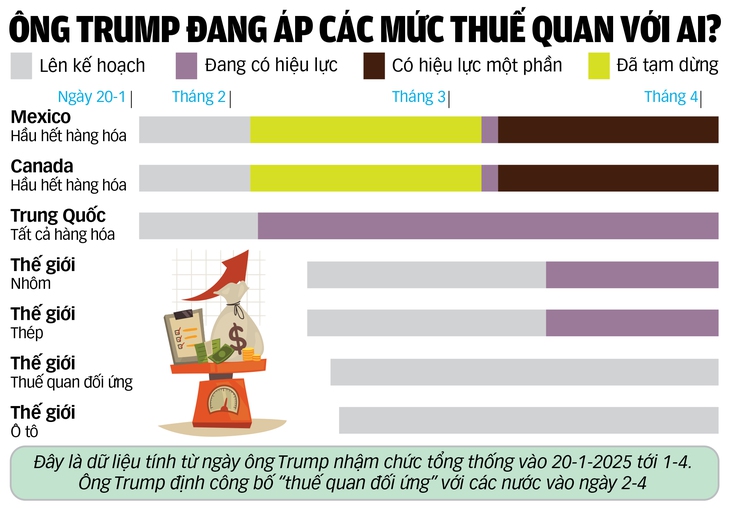
President Trump’s strategy involves imposing customs duties on goods from key trading partners, including Canada, Mexico, and China, with the stated aim of boosting domestic production and revenue.This approach, however, is challenging established free trade agreements and triggering retaliatory measures from major economic powers.
International Backlash and Retaliatory Measures
The imposition of tariffs has not been met with open arms. Canada, for example, has voiced strong opposition, with Prime Minister Mark Carney stating that the United States “is no longer a reliable partner.” This sentiment reflects a growing concern among allies about the direction of U.S. trade policy.
is no longer a reliable partner.
Mark Carney, Canadian Prime Minister
Echoing this sentiment, European Commission President Ursula von der Leyen asserted on April 1st that the European Union is prepared to respond with a “strong reprisals plan” if necessary, emphasizing that the EU did not initiate the trade conflict.
is not the one that triggered this confrontation, but if necessary, we now have a strong reprisals plan
Ursula von der Leyen, President of the European Commission
China has already implemented retaliatory tariffs on a range of American products and has warned of further action if the U.S. continues its reciprocal customs duties policy. Furthermore, reports indicate that China, Japan, and South Korea are exploring a coordinated response to the American tariffs, signaling a united front against the U.S. trade policies.
Unintended Consequences: Analyzing the Potential Impact
Trade experts caution that President Trump’s tariff strategy may not achieve all of its intended goals concurrently, and some objectives may even be contradictory. For instance, while tariffs might encourage domestic production, reduced imports could lead to lower tax revenues for the U.S. government, contrary to initial expectations.
The Burden on Consumers and Businesses
As seen during President Trump’s first term, U.S. consumers are likely to bear the brunt of these new tariffs. Retailers often pass increased costs onto consumers through higher prices, while manufacturers who rely on imported materials face increased production expenses. This can lead to a decrease in purchasing power and potentially stifle economic growth.
Vietnam’s Economic Resilience amidst Global Uncertainty
Published: april 3, 2025 by Archynetys

The global economic landscape is becoming increasingly complex, with potential recessionary pressures looming in major economies. Though, Vietnam appears well-positioned to weather these challenges, thanks to its proactive trade policies and diversified partnerships.
US Recession Risk on the Rise
Recent analysis from Goldman Sachs indicates a heightened risk of recession in the United States. The investment bank now estimates a 35% chance of a recession within the next 12 months, a significant jump from the previous assessment of 20%. This increased risk is attributed to factors such as high taxes, which could stifle economic growth, reignite inflation, and drive up unemployment rates. These factors create an uncertain habitat for global trade, impacting countries worldwide.
Vietnam’s Strategic Advantage: Diversification and Openness
Despite these global headwinds, Vietnam’s economic outlook remains positive. Adam Corrall, Director of Commerce and Investments in Asia at Australasian PREMIME PARTNERS, believes Vietnam possesses the resilience to withstand potential economic shocks stemming from fluctuating customs tariffs. Corrall highlighted Vietnam’s strategic diversification as a key strength.
Vietnam has the space necessary to diversify its trade and adapt to international supply chains.
Adam Corrall, Director of commerce and Investments in Asia, Australasian PREMIME PARTNERS
Vietnam’s proactive approach to international trade is evident in its extensive network of free trade agreements (FTAs). with 17 FTAs already in place and two more in advancement, along with thorough strategic partnerships with 12 nations, Vietnam has strategically positioned itself to adapt to evolving global trade dynamics. This diversification allows Vietnam to explore alternative markets and supply chains, reducing its reliance on any single trading partner.
A Commitment to Cooperation and Adaptability
Corrall emphasized Vietnam’s commitment to open cooperation and its ability to navigate complex geopolitical landscapes. He noted that while tariff decisions ultimately rest with the White House, Vietnam has proactively prepared for various scenarios. Vietnam’s dedication to fostering strong relationships with bilateral and multilateral partners further strengthens its position as a reliable and adaptable player in the global economy.
Vietnam always wishes to cooperate with all parties… Vietnam remains resolved to cooperate openly, without taking sides. I think Vietnam has succeeded very well in this area.
Adam Corrall, director of Commerce and Investments in Asia, Australasian PREMIME PARTNERS
This commitment to cooperation, combined with its robust economic and social foundations, positions Vietnam to not only survive but thrive amidst global economic fluctuations. As global supply chains adapt to evolving trade policies, Vietnam is poised to seize new opportunities and solidify its role as a key economic hub in Southeast Asia.
The Rise of the Machines: How AI is Reshaping Content Creation
April 3, 2025
The AI Content Revolution: A Double-Edged Sword
Artificial intelligence is rapidly transforming the content creation landscape, offering unprecedented opportunities for efficiency and scale. Though, this technological leap also presents significant challenges, particularly concerning originality, quality, and ethical considerations.The integration of AI tools into content workflows is no longer a futuristic concept; it’s a present-day reality impacting businesses and creators across various industries.
Recent data indicates a surge in the adoption of AI-powered content generation platforms. A 2024 study by Gartner projects that AI will be involved in 90% of all content creation by 2025, highlighting the pervasive influence of these technologies. This shift necessitates a critical examination of both the benefits and potential pitfalls.
Boosting Productivity and Efficiency
One of the primary drivers behind the adoption of AI in content creation is its ability to automate repetitive tasks and accelerate production cycles. AI tools can generate drafts, summarize lengthy documents, and even create entire articles based on provided keywords and parameters. This allows human creators to focus on higher-level strategic thinking, creative refinement, and ensuring the overall quality and accuracy of the content.
For example, marketing teams are leveraging AI to generate variations of ad copy for A/B testing, significantly reducing the time and resources required for campaign optimization. news organizations are using AI to create initial drafts of routine news reports, freeing up journalists to focus on investigative journalism and in-depth analysis.
The Challenge of Originality and Authenticity
Despite the potential benefits, concerns remain about the originality and authenticity of AI-generated content. As AI models are trained on vast datasets of existing content, there is a risk of unintentional plagiarism or the creation of derivative works that lack unique insights or perspectives. Ensuring originality requires careful oversight and human intervention.
Furthermore, the lack of emotional intelligence and lived experiance in AI-generated content can result in a sterile and impersonal tone. While AI can mimic human writing styles, it frequently enough struggles to capture the nuances of human emotion and the subtleties of language. This can be particularly problematic in areas such as creative writing, opinion pieces, and personal narratives.
Ethical Considerations and the Future of Content Creation
The increasing reliance on AI in content creation raises significant ethical questions. Who is responsible for the accuracy and integrity of AI-generated content? how can we prevent the spread of misinformation and disinformation through AI-powered platforms? what are the implications for human writers and creators in a world where machines can generate content at scale?
These questions demand careful consideration and proactive solutions. Developing clear ethical guidelines, implementing robust fact-checking mechanisms, and investing in human skills development are crucial steps in navigating the evolving landscape of AI-driven content creation. The future of content creation will likely involve a collaborative approach, where humans and AI work together to create high-quality, original, and ethical content.
The key to success in the age of AI is not to fear the technology, but to embrace it as a tool to enhance human creativity and productivity.– Dr. Anya Sharma, AI ethics Researcher
SEO and AI: A Symbiotic Relationship?
The impact of AI on Search Engine optimization (SEO) is undeniable. AI algorithms are now integral to how search engines rank content, making it crucial for content creators to understand how to optimize their work for AI-driven search. While AI can assist in keyword research and content optimization, relying solely on AI-generated content for SEO purposes can be risky. Search engines are increasingly sophisticated in detecting and penalizing low-quality, AI-generated content that lacks originality and value.
A balanced approach is essential. Leverage AI tools to enhance your SEO efforts, but always prioritize creating high-quality, engaging content that provides genuine value to your audience. Focus on building authority,establishing trust,and fostering meaningful connections with your readers. In the long run, these factors will be more critically important than simply optimizing for AI algorithms.
The post Liberation Day USA: What You Need to Know appeared first on Archynetys.