
New research has solved one of paleontology’s most enduring puzzles: why Tyrannosaurus rex and other massive theropod dinosaurs evolved puny forelimbs despite their towering size. A study published May 20 in Proceedings of the Royal Society B reveals that as these predators developed stronger skulls and more devastating bites, their arms shrank—not because they became useless, but because evolution prioritized brute-force hunting over dexterity. The findings, based on 85 species of carnivorous dinosaurs, show this trait emerged independently in at least five separate lineages, reshaping our understanding of how giant predators adapted to their prey.
The Evolutionary Trade-Off: Why Bigger Heads Meant Smaller Arms
The answer lies in a brutal arms race between predators and their prey. As plant-eating sauropods grew to colossal sizes—some reaching lengths of 100 feet and weights of 80 tons—theropod dinosaurs faced a simple mechanical problem: how to take down giants without getting trampled or outmaneuvered. The solution wasn’t claws or agility, but sheer cranial power. According to the study, reduced forelimbs evolved in concert with increased cranial robusticity and gigantism, meaning that as skulls became thicker, more reinforced, and capable of delivering bone-crushing bites, the need for grasping arms diminished.

Charles Roger Scherer, a doctoral student at University College London and lead author of the research, framed it bluntly: “If you’re a dinosaur with a very strongly put together skull, chances are you’re going to have very small forelimbs.” The correlation wasn’t just about size—it was about function. As the study notes, “Everything was approached headfirst, so the head just became what came into contact with the prey.” For apex predators like Tyrannosaurus rex, the skull wasn’t just a weapon; it was the primary interface with the world. The jaws did the work of subduing prey, while the forelimbs, once critical for grasping or stabilizing, became evolutionary dead weight.
“Reduced/vestigial forelimbs evolved in at least five theropod lineages in concert with increased cranial robusticity and gigantism.”
— Proceedings of the Royal Society B, May 20, 2026
Five Separate Paths to the Same Solution
The study’s most striking finding is that this evolutionary trade-off wasn’t unique to T. rex. Across 85 non-avian theropod species—ranging from the feathered Velociraptor to the armored Carnotaurus—researchers identified five distinct lineages where forelimb reduction occurred alongside skull reinforcement. The pattern held true even among species that didn’t share a direct ancestor, suggesting a convergent evolution: when faced with similarly massive prey, different predators arrived at the same solution.

Among the worst offenders for tiny arms were the tyrannosaurids, abelisaurids, and carcharodontosaurids, which “show the greatest forelimb reduction relative to the skull.” The study’s data paints a clear picture: as skulls grew more robust—thicker bones, stronger musculature, and greater bite force—the forelimbs shrank proportionally. This wasn’t just about size; it was about specialization. Predators that relied on their heads to deliver the killing blow had no need for the dexterity of grasping limbs.
Yet the arms didn’t vanish entirely. As Scherer acknowledged, “They obviously served some kind of function, otherwise they wouldn’t have them.” The question now is what that function was—and whether it changed over time. Some paleontologists speculate the stubby limbs may have aided in mating displays, stabilizing the torso during deep bites, or even serving as sensory organs. But the study’s focus on cranial robusticity leaves that question tantalizingly open.
Spinosaurus: The Outlier That Defies the Rule
Not all theropods followed this evolutionary script. The Spinosaurus, a semi-aquatic predator with a crocodile-like snout, bucked the trend by retaining long, powerful forelimbs—some estimates suggest they measured up to 7 feet in length. This exception underscores a critical point: the study’s findings apply to predators that specialized in head-first ambush hunting. Spinosaurus, by contrast, likely used its limbs for swimming, stabilizing its body in water, or even manipulating prey.
The contrast between T. rex and Spinosaurus highlights how evolution doesn’t dictate a single path to success. While one lineage traded limbs for jaw power, another doubled down on versatility. This diversity challenges the notion that tiny arms were an inevitable outcome of gigantism. Instead, it suggests that ecological niche played a decisive role. A predator’s hunting strategy—whether it relied on stealth, speed, or brute force—determined whether its forelimbs would shrink or persist.
What the Arms Were For—and Why We Still Don’t Know
The study’s authors are quick to admit: they’ve explained why the arms shrank, but not what they were used for. The “use it or lose it” principle of evolution is clear—structures that no longer confer a survival advantage shrink over generations. But in the case of theropod forelimbs, the story isn’t as simple as “they became useless.”
Genetic research suggests that the genes for limb development persisted even after the limbs themselves diminished. This implies that while the physical structure changed, the underlying biological machinery remained active—perhaps repurposed for other functions. Some scientists theorize that the reduced limbs may have played a role in thermoregulation, helping to dissipate heat from the massive bodies of these dinosaurs. Others point to display functions, where even tiny limbs could have been used in ritualized combat or courtship.
What’s certain is that the arms weren’t entirely vestigial. A 2024 study of T. rex fossils revealed that the muscles attaching to the forelimbs were surprisingly well-developed, suggesting they retained some functional capacity. This raises an intriguing possibility: perhaps the limbs weren’t just shrinking—they were transforming. If future research can pinpoint the exact movements these stubby arms were capable of, it may rewrite our understanding of theropod behavior.
The Bigger Picture: How This Changes Dinosaur Science
This study doesn’t just answer a curiosity about T. rex’s comically small arms—it forces a reevaluation of how we interpret dinosaur anatomy. For decades, paleontologists debated whether the forelimbs were a quirk of individual species or a broader evolutionary trend. The new research confirms the latter, revealing that cranial robusticity and gigantism drove forelimb reduction across multiple lineages. This has implications far beyond aesthetics.
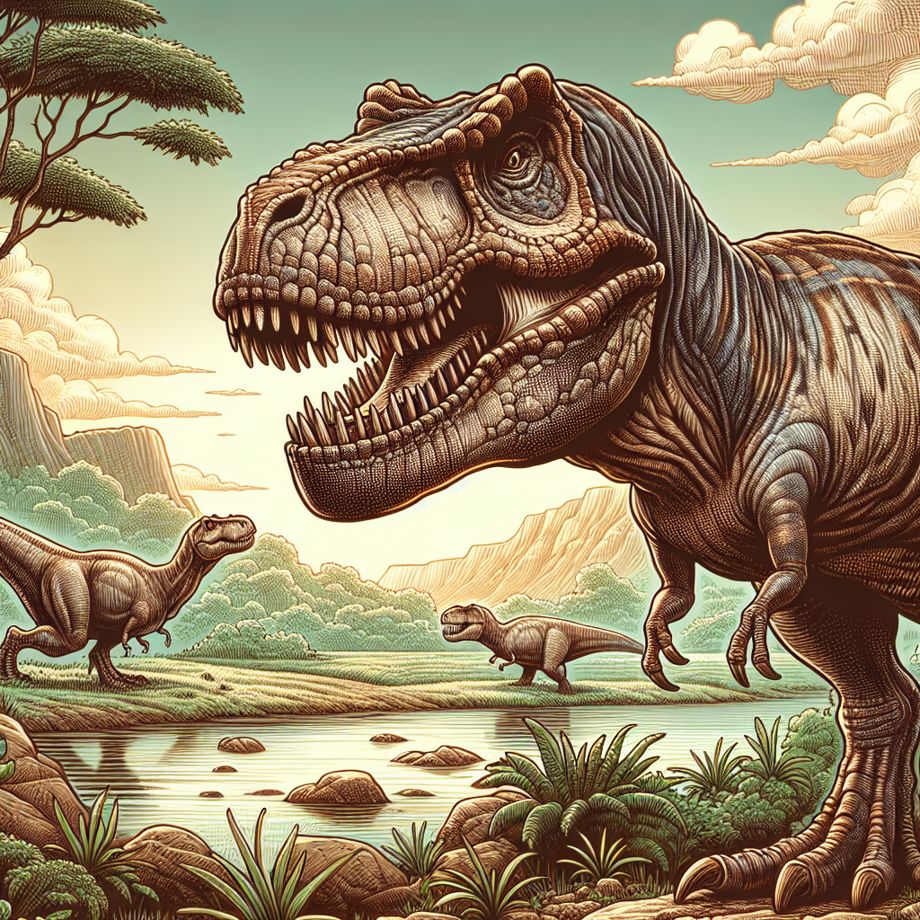
Consider the ecological arms race of the Late Cretaceous. As sauropods grew larger, predators had to adapt—or go extinct. The study’s data suggests that the most successful hunters weren’t those with the most agile limbs, but those that could deliver the most devastating cranial blows. This shift in hunting strategy may have accelerated the decline of other theropod groups that relied on speed or stealth, while favoring the rise of the “head-first” predators.
It also challenges assumptions about dinosaur intelligence and behavior. If T. rex and its relatives were relying almost entirely on their skulls to hunt, does that imply a different kind of problem-solving? Were they less dependent on manual dexterity, or had their brains evolved to compensate for the loss of limb function? The study doesn’t answer these questions, but it opens the door for future research into the cognitive trade-offs of gigantism.
What’s Next: The Arms Mystery Isn’t Over Yet
The study’s authors are already planning follow-up work to explore the functional anatomy of theropod forelimbs. Using advanced imaging techniques like micro-CT scans, they hope to reconstruct the muscles, tendons, and even nerve pathways of these reduced limbs. The goal? To determine whether they were capable of precise movements, or if they had become little more than sensory appendages.
One exciting avenue is the study of growth patterns. Did the limbs shrink gradually over millions of years, or was there a sudden evolutionary tipping point? And how did this change affect the dinosaurs’ overall physiology? For example, did the loss of limb function free up energy for other systems, like digestion or brain development?
There’s also the question of sexual selection. Could the stubby arms have played a role in mating displays, even if they weren’t useful for hunting? In modern animals, exaggerated traits—like the peacock’s tail—often serve display functions rather than practical ones. If theropod forelimbs followed a similar pattern, it would add another layer to our understanding of dinosaur social behavior.
For now, the study leaves us with a clearer picture of why T. rex’s arms were so tiny—but also with more questions than ever. The paradox of the massive skull and puny limbs isn’t just a quirky detail of dinosaur anatomy; it’s a window into how evolution balances specialization and adaptation. And as Scherer put it, “Hopefully we can find that out with a bit more work.” Given the pace of paleontological discovery, that work might not take long.
Devdiscourse’s coverage of the study highlights the broader implications for theropod evolution, while The Times of India’s analysis connects the findings to the arms race between predators and prey. For the full study, see the publication in Proceedings of the Royal Society B.