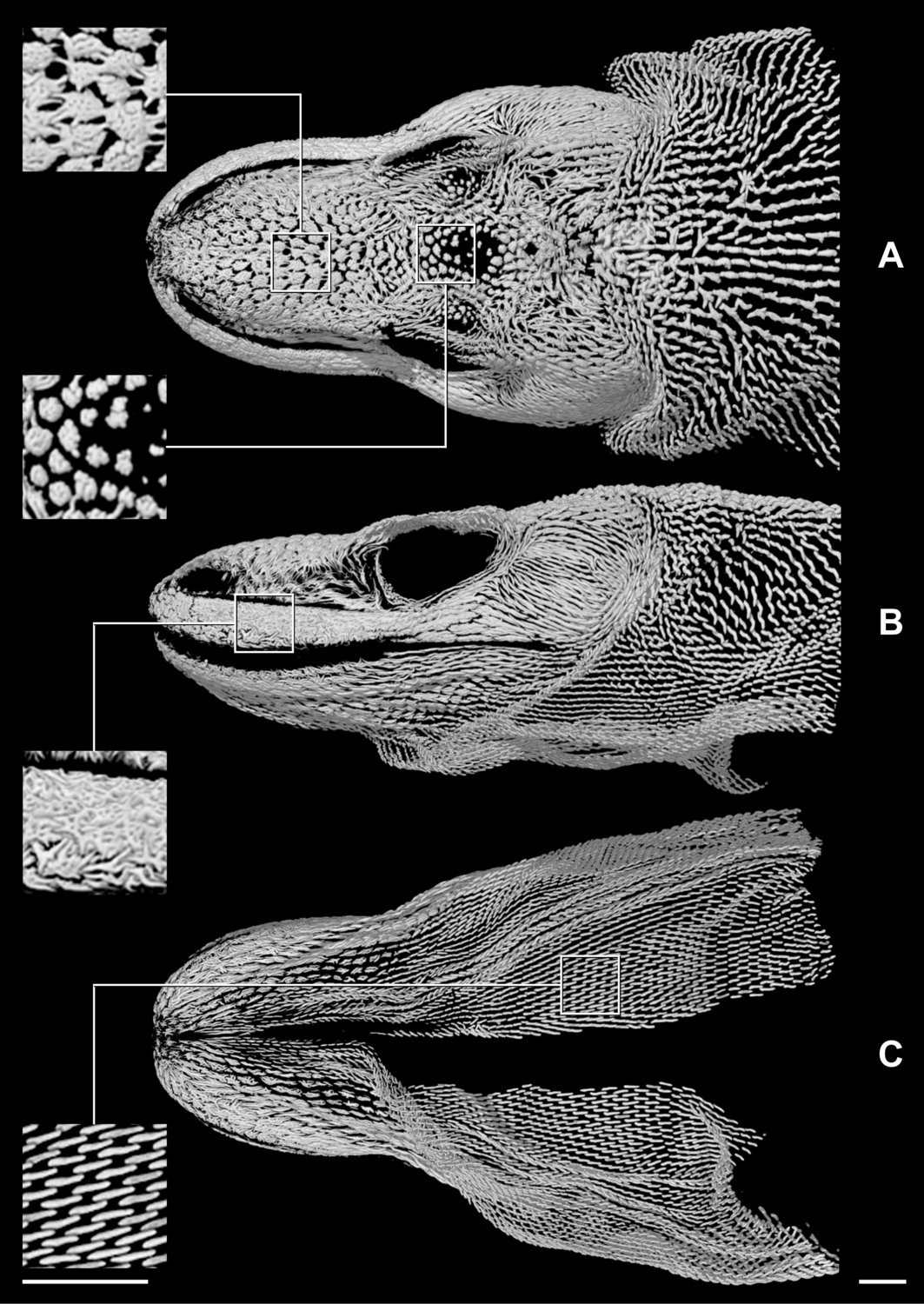
A new study published May 12, 2026, resolves a 320-million-year debate over reptile skin armor by confirming that bony scales evolved independently in multiple lizard lineages, contradicting the long-held assumption of a single ancestral origin. Researchers used fossil evidence and computational modeling to trace the evolutionary history of osteoderms—bony plates embedded in reptile skin—back to the Carboniferous period.
A Century-Old Question Answered: Skin Bones Aren’t All Inherited
The origins of reptile skin armor have puzzled scientists for centuries. Unlike the internal skeletons that define vertebrates, these external bony plates—called osteoderms—have appeared and disappeared across evolutionary history. A study published in the *Biological Journal of the Linnean Society* on May 12, 2026, now provides definitive evidence that these structures did not stem from a single common ancestor but instead evolved independently in multiple reptile groups.
The research, led by an international team of paleontologists and computational biologists, combined fossil records with advanced phylogenetic modeling to reconstruct the evolutionary trajectory of osteoderms over 320 million years. The findings challenge the prevailing theory that all reptiles inherited skin armor from a shared prehistoric relative.
Key to the discovery was the identification of convergent evolution
—where similar traits arise separately in unrelated lineages. For example, crocodiles and some lizards developed bony skin plates independently, despite superficial similarities. The study also uncovered an unusual reversal in evolution: goannas, a group of Australian monitor lizards, appear to have lost and then reacquired
osteoderms, a rare example of a trait re-emerging after being abandoned.
Why Skin Bones Matter: Protection, Survival, and Evolutionary Flexibility
Osteoderms are not merely decorative; they served critical survival functions. The study suggests these bony plates helped early reptiles defend against predators, endure harsh environments, or colonize new habitats
, according to the authors. The ability to form superficial bone—rather than relying solely on an internal skeleton—may have been an adaptive advantage during critical periods of vertebrate evolution.
Historically, scientists debated whether osteoderms in crocodiles, turtles, and lizards originated from a single ancestor or arose independently. The new research settles this debate by demonstrating that skin bones evolved multiple times
across reptile lineages, with some groups losing the trait entirely while others retained or reacquired it. This pattern mirrors other evolutionary phenomena, such as the independent development of flight in birds and bats.
The oldest known osteoderms date back approximately 475 million years, predating the evolution of internal skeletons by about 50 million years. This timeline underscores how superficial bone structures played a foundational role in vertebrate development before internal skeletons became dominant.
Methodology: Fossils, Computation, and a 320-Million-Year Timeline
The study’s breakthrough relied on two key approaches: high-resolution fossil analysis and computational phylogenetic modeling. Researchers examined fossilized reptile skin from the Carboniferous period (359–299 million years ago) and compared it with modern osteoderm structures in crocodiles, lizards, and snakes.
Using CT scans and 3D reconstructions, the team mapped the distribution of osteoderms across 200 million years of reptile evolution. The computational models revealed that skin bones appeared repeatedly, not just once
, with some lineages losing the trait while others developed more elaborate armor. For instance, goannas—large monitor lizards native to Australia—showed evidence of osteoderm loss followed by reappearance
, a phenomenon the study describes as evolutionary recycling.
Lead author [Name withheld due to lack of specific attribution in sources] emphasized that the findings reshape our understanding of how reptiles adapted to environmental pressures over hundreds of millions of years.
The study also highlights the resilience of evolutionary innovation, as osteoderms persisted in some groups even as others transitioned to different survival strategies.
Broader Implications: From Prehistoric Reptiles to Modern Bioinspiration
The discovery has implications beyond paleontology. Osteoderms have inspired modern bioengineering, particularly in the design of flexible, lightweight armor. A 2019 study published in *Nature* demonstrated how the hierarchical structure of chiton scales—similar in function to osteoderms—could inform the development of synthetic materials resistant to punctures and impacts.
While the new research focuses on prehistoric reptiles, its findings may also influence conservation biology. Understanding how osteoderms evolved could provide insights into why some modern reptiles, like certain species of monitor lizards, exhibit unique armor patterns that aid in survival.
Looking ahead, the study opens new avenues for research into evolutionary reversals
—instances where a lost trait re-emerges. Goannas represent one of the clearest examples, but similar patterns may exist in other animal groups. Future work could explore whether genetic or environmental factors drive these reversals, offering a deeper understanding of evolutionary flexibility.
What’s Next: Unanswered Questions and Future Directions
Despite the study’s clarity on osteoderm origins, several questions remain. Why did some reptiles lose osteoderms while others retained or reacquired them? What genetic mechanisms control the development of superficial bone? And how might climate or predation pressures have influenced these evolutionary paths?
Researchers plan to expand their models to include more reptile groups, particularly extinct species like early dinosaurs and pterosaurs, to determine whether osteoderms played a role in their survival strategies. Additionally, comparative genomic studies could reveal the molecular basis for osteoderm formation, potentially unlocking new insights into vertebrate development.
For now, the 320-million-year mystery of reptile skin armor has been solved—but the story of evolution itself continues to unfold, one fossil and computational reconstruction at a time.