
Oncologists in Poland are sounding the alarm as a significant number of patients first encounter signs of advanced cancer while seeking routine vision correction. This diagnostic delay frequently leaves medical professionals struggling to manage late-stage disease, highlighting a critical gap in public awareness and the urgent need for earlier clinical intervention.
The Silent Progression of Ocular Melanoma
The challenge of early detection is particularly acute for ocular cancers. In Poland, approximately 450 to 500 cases of choroidal melanoma—the most common primary malignant eye tumor in adults—are diagnosed annually. Despite advancements in imaging technology, the disease often remains asymptomatic until it reaches a stage where treatment options become significantly more limited. According to WP abcZdrowie, the survival rate remains stagnant, with mortality reaching 50 percent within five years of diagnosis.

Prof. Iwona Rospond-Kubiak, a specialist in eye cancer treatment at the University Clinical Hospital in Poznań, emphasizes that the window for effective intervention is narrow. During the recent eighth conference titled “Okulistyka w Praktyce,” organized by the Oculomedica Eye Hospital, experts noted that while clinicians are identifying more genetic mutations associated with the disease, the clinical behavior of these tumors remains unpredictable.

“Pacjenci zgłaszają się do nas, gdy nowotwór jest już zaawansowany. Często dzieje się to przy okazji rutynowego badania wzroku, kiedy pacjent chce tylko wymienić okulary.”
Prof. Iwona Rospond-Kubiak, University Clinical Hospital in Poznań, via WP abcZdrowie
Even when tumors are caught while small, the risk of metastasis—particularly to the liver—persists. For patients, the diagnosis is often a shock, occurring during routine visits to an optometrist or ophthalmologist where they initially expected only to receive a prescription for glasses. Clinical data suggests that early, asymptomatic detection relies heavily on routine fundus examinations, which allow for the identification of pigmented lesions that may later transform into malignant melanomas. Without these preventative screenings, the disease frequently progresses to a stage where ocular preservation is no longer a viable surgical outcome.
The Burden of Communication in Oncology
Beyond the clinical struggle, the psychological toll on both patients and medical staff is immense. As reported by Rynek Zdrowia, healthcare providers often experience profound feelings of helplessness when faced with difficult questions from patients who have just received a life-altering diagnosis.
Mariola Kosowicz, a psycho-oncologist at the Maria Skłodowska-Curie National Research Institute of Oncology in Warsaw, argues that the cultural avoidance of death makes these interactions even more taxing. Doctors are not always equipped to handle the emotional weight of a patient’s direct inquiries about their prognosis. The lack of standardized training in oncology communication often leaves physicians feeling isolated during the most difficult moments of the patient-doctor relationship.
“Ile, panie doktorze, mi zostało? Czy ja, panie doktorze, umrę?”
Patient inquiry, via Rynek Zdrowia
The consensus among experts is that communication skills must be viewed as an essential medical tool. Dr. Maria Górnaś, an oncologist at the Military Institute of Medicine, suggests that the high growth rate of cancer cases in Poland necessitates a more robust approach to psycho-oncological training for all physicians, not just specialists. Learning to navigate these conversations allows doctors to maintain their focus on treatment while providing necessary support to the patient. Effective communication has been linked in clinical literature to better treatment adherence and improved patient quality of life, yet it remains a neglected component of standard medical curricula in many institutions.
Systemic Challenges and Future Directions
The oncology sector in Poland faces a dual challenge: a rising number of cancer cases and the need for new, effective treatment tools. Jan Szelejewski, president of Vipharm SA, noted that while the burden on physicians is increasing, the industry is gradually introducing new therapeutic options. In the field of ocular oncology, clinical trials for local and adjuvant treatments are already in their third phase, offering a potential shift in outcomes for patients in the coming years. These trials are critical, as they investigate targeted therapies designed to address the unique molecular profile of ocular tumors, which often do not respond to conventional systemic chemotherapy.
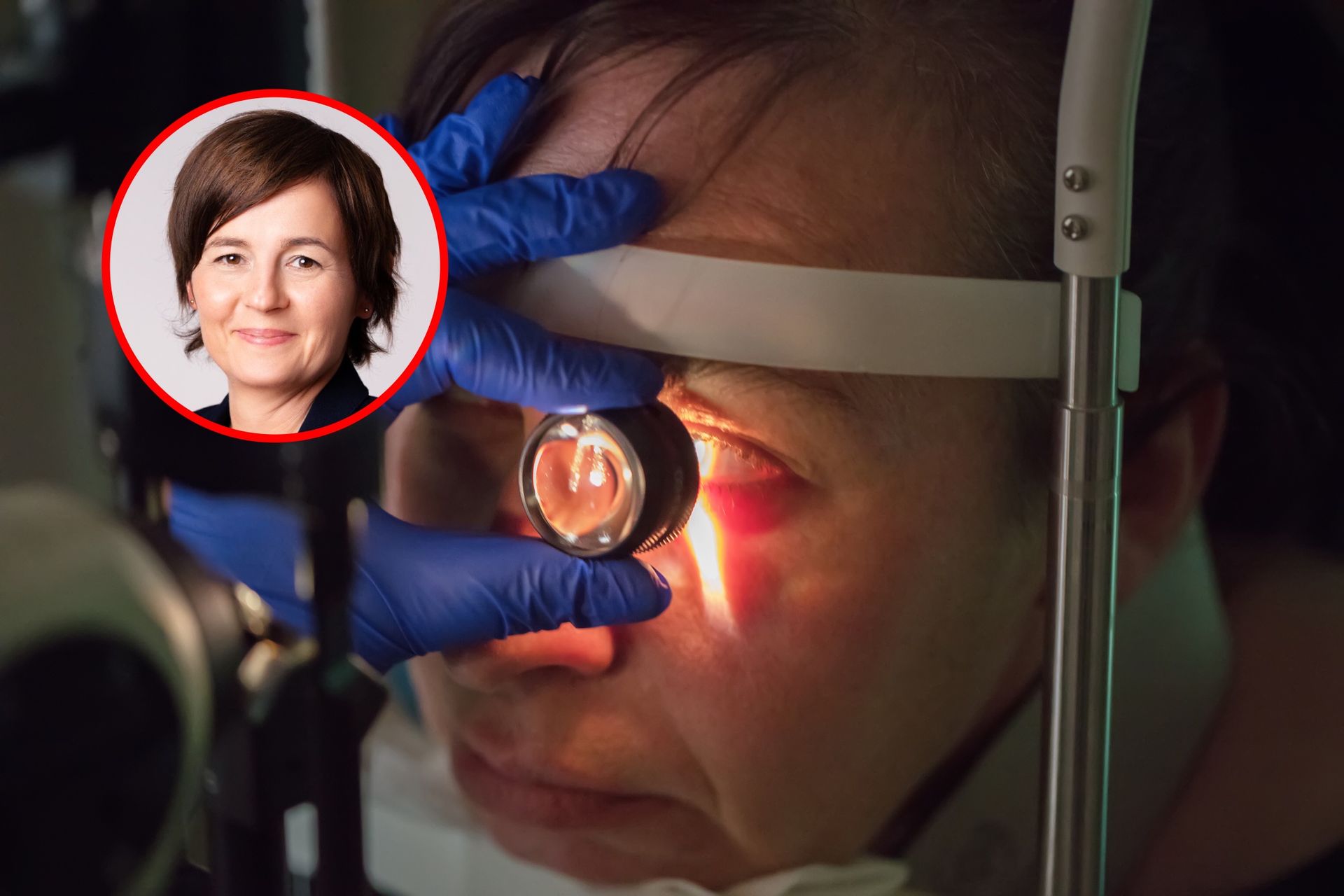
For now, the focus remains on early detection and patient education. Because symptoms of ocular melanoma can be elusive, Prof. Rospond-Kubiak stresses that the speed at which a patient is diagnosed and referred for specialized care—whether through radiotherapy, brachytherapy, or surgery—is the most vital factor in determining whether the patient can preserve their vision. The medical community continues to urge that even minor, persistent changes in vision should be investigated thoroughly, rather than dismissed as routine age-related decline. Early referral to an ocular oncology center is essential, as these facilities are equipped with the specialized hardware necessary for precise tumor mapping and radiation planning.
Patients are advised to consult their healthcare providers immediately if they notice unusual visual changes, as early screening remains the only reliable method for mitigating the risks of advanced disease. While the prognosis for late-stage ocular melanoma remains guarded, ongoing research into adjuvant therapies and improved diagnostic screening protocols offers a pathway toward better management of this disease. Individuals experiencing symptoms should seek a comprehensive examination from an ophthalmologist trained in oncology to ensure that any potential malignancy is identified before it can progress beyond the eye.