China’s food safety crackdown on delivery platforms enters a stricter phase June 1, as regulators and major cities tighten oversight of online food delivery operations to eliminate “ghost kitchens” and enforce transparency in supply chains. The new rules, set to take effect nationwide, mandate real-time verification of vendor licenses, mandatory “clear kitchen” video feeds for all listed restaurants, and standardized packaging to prevent tampering during delivery.
New Rules Force Platforms to Verify Every Vendor’s License in Real Time
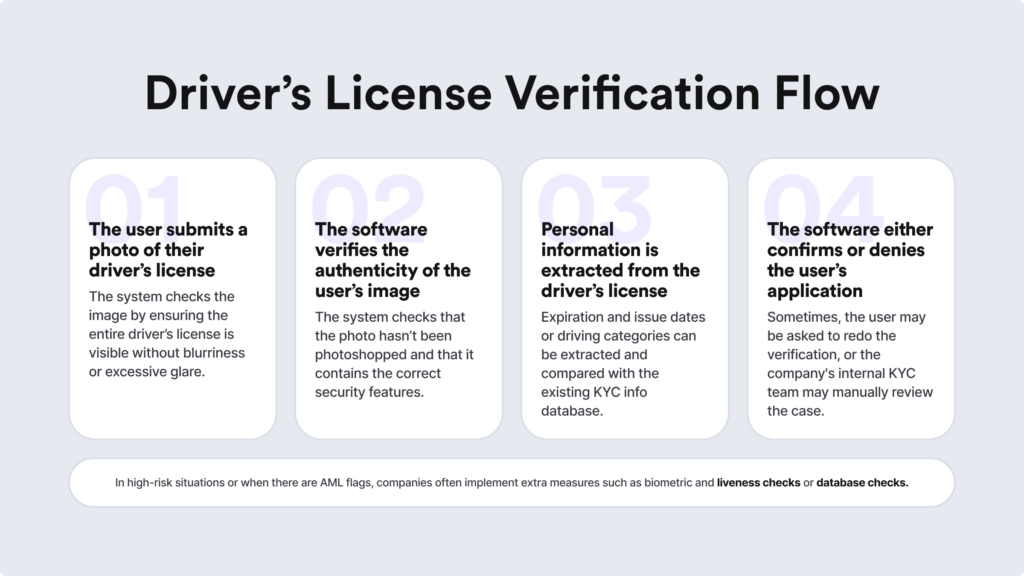
Starting June 1, third-party delivery platforms—including Meituan, Ele.me, and JD.com’s delivery services—must implement a three-step verification system for every restaurant listing: license checks, operator verification, and physical store confirmation. According to a May 28 directive from Beijing and Shanghai market regulators, platforms will cross-reference vendor licenses with provincial food safety databases to ensure no unlicensed or “ghost kitchens” operate under fake addresses. The rules also require platforms to archive verification records for at least two years, with random audits by local authorities.
The directive, jointly issued by the Beijing Municipal Market Supervision Bureau and the Shanghai Municipal Administration for Market Regulation, specifies that platforms must integrate their vendor databases with the National Food Safety Credit Information System, a centralized platform managed by the State Administration for Market Regulation (SAMR). The system, launched in 2023, already tracks over 12 million food businesses nationwide, but its enforcement in delivery platforms marks a significant expansion.
In a May 30 press conference, Li Wei, Deputy Director of SAMR’s Food Safety Division, clarified that platforms failing to comply with the verification rules could face fines ranging from ¥100,000 to ¥500,000 per violation, with repeat offenders risking temporary suspension of their delivery licenses. “This is not just about catching bad actors—it’s about rebuilding trust in the entire food delivery ecosystem,” Li stated, adding that SAMR would deploy 1,200 inspectors nationwide to conduct surprise audits of platforms and restaurants.
Beijing and Shanghai’s joint administrative guidance—released the same day as the national regulations—goes further, mandating that platforms establish a real-time risk monitoring system to flag violations such as “one store, multiple listings” (a tactic used by ghost kitchens to appear as multiple restaurants) or “dark kitchens” operating without visible storefronts. The move follows a 2024 crackdown in Shenzhen that shut down over 300 unlicensed delivery-only operations, with 18 operators facing criminal charges for fraudulent licensing. Among them, Zhang Xiaohui, the founder of a now-defunct delivery-only chain called FlashBite, was sentenced to 18 months in prison for operating 47 unlicensed kitchens under false addresses.
Every delivery restaurant must now prove it has a physical store, valid license, and matches the address on its permit. No exceptions.
To enforce the new rules, regulators in Guangzhou have already begun cross-platform verification, requiring Meituan, Ele.me, and Dianping Takeout to share vendor data with the city’s Food Safety Command Center. In a May 29 statement, the center revealed that preliminary checks had identified 2,147 suspicious listings across the three platforms, with 45% linked to ghost kitchens. Among the flagged vendors, 123 were operating under the same address but listed as separate restaurants, a clear violation of the “one store, one license” rule.
Industry insiders warn that smaller platforms may struggle with compliance. Chen Jun, CEO of Dianping Takeout, acknowledged in an interview with QQ Technology that his platform’s 30,000 vendors in Guangzhou alone would require manual verification for at least 60% of listings due to incomplete digital records. “We’re investing heavily in AI tools to automate checks, but the initial phase will be labor-intensive,” Chen said, estimating that compliance could temporarily reduce active listings by 15–20% in high-risk regions.
“Clear Kitchen” Videos Become Mandatory for All Listings
The new regulations require every restaurant on delivery platforms to display a live or recorded video feed of its kitchen operations—a system already adopted by Meituan and Ele.me in pilot programs. Known as “互联网+明厨亮灶” (Internet + Clear Kitchen), the rule forces vendors to either install cameras in their kitchens or upload pre-recorded footage showing food preparation, storage, and hygiene standards. Consumers will see a “clear kitchen” badge next to compliant restaurants, while non-compliant listings will be flagged with warnings.
In Zhejiang’s Jiaxing district, where the rule was tested last month, 87% of restaurants already complied with similar requirements, according to local market regulators. However, enforcement in Jiaxing revealed three major loopholes: pre-recorded footage edited to hide violations, cameras positioned to avoid capturing high-risk areas, and vendors disabling feeds during peak hours. The Jiaxing Market Supervision Bureau responded by installing remote-monitoring software that detects feed tampering, with 17 restaurants fined ¥3,000–¥10,000 for non-compliance.
Meituan, which pioneered the “clear kitchen” system in 2022 with 5,000 pilot restaurants, has expanded its camera network to cover 80% of its vendor base in Tier 1 cities. The company’s AI-powered food safety team, led by Dr. Wang Mei, a former food science professor at Tsinghua University, uses computer vision to analyze kitchen footage for violations such as cross-contamination, improper storage temperatures, and lack of handwashing stations. In a May 27 internal memo obtained by Ifeng News, Meituan disclosed that its AI system had flagged 12,456 hygiene issues in the past month alone, leading to 2,189 corrective actions by vendors.

Our AI can now detect food safety risks in real time, but the biggest challenge is getting vendors to act on the warnings. Some ignore alerts until we threaten to delist them.
In a case study from Chengdu, where the “clear kitchen” rule was enforced in April, regulators found that 14% of restaurants with video feeds had hidden cameras in storage rooms rather than preparation areas. The Chengdu Food Safety Bureau issued a red warning to these vendors, requiring them to reinstall cameras in compliance with SAMR’s technical standards within seven days or face delisting. The bureau’s Deputy Director, Liu Wei, told China News Service that the crackdown had already led to three restaurants shutting down after repeated violations were caught on camera.
One Beijing-based burger chain, Bear’s Den, told China News that its AI-powered kitchen monitoring system—used to detect food safety violations—had already caught “wall and floor cleanliness issues” in two of its locations, prompting immediate corrective actions. The chain’s Food Safety Manager, Zhang Lin, explained that the system had automatically triggered alerts when cameras detected mold growth on walls and pest activity in storage areas. “We had no idea these problems existed until the AI flagged them,” Zhang said, adding that the chain had retrained 150 staff members based on the findings.
Critics argue that the “clear kitchen” requirement disproportionately affects small and medium-sized restaurants (SMEs), which may lack the budget for professional camera installations. The Beijing Restaurant Association estimated in a May 25 report that 30% of its 12,000 member restaurants would need ¥5,000–¥20,000 in upgrades to comply. The association’s Secretary-General, Li Hua, urged regulators to provide subsidies for low-income vendors, citing cases where family-run kitchens had been forced to close after failing to meet the new standards.
Standardized Packaging and Delivery Safety Become Non-Negotiable
To prevent food contamination during delivery, the new rules ban non-sealed packaging—such as stapled or tape-sealed containers—and require all delivery boxes to use tamper-evident seals. Regulators in Shanghai’s Pudong district have already begun spot checks on delivery personnel, confiscating boxes without proper seals and fining vendors up to ¥5,000 per violation. The rules also prohibit third-party delivery drivers from handling food without proper training or hygiene certifications.
Pudong’s enforcement has been swift: since the rules were announced in May, the district’s Market Supervision Bureau has conducted 1,245 inspections on delivery personnel and vendors, resulting in 87 fines and the immediate suspension of 12 delivery drivers for using non-food-grade containers. The bureau’s Deputy Director, Chen Yuting, revealed in a May 30 press briefing that 40% of violations involved drivers reusing containers—a practice banned under the new regulations. “We’re also testing blockchain-based packaging logs to track containers from vendor to consumer,” Chen said, noting that the system would be piloted in 500 restaurants by July.
Gold Mountain City (金山), a suburb of Shanghai, took preemptive action by publicly rewarding residents who report unsafe delivery practices. Since April, over 120 tips led to inspections, resulting in the shutdown of three unlicensed kitchens and a fine against a delivery driver for using non-food-grade containers. The city’s market supervision bureau now requires all delivery platforms to log every order for three years, creating a traceable record for food safety investigations.

We’ve seen cases where delivery drivers reuse containers or leave food exposed during transit. These rules finally put an end to that.
The city’s three-year order logging requirement has raised concerns among delivery platforms about data storage costs. Meituan’s Logistics Director, Huang Wei, told Sina Tech that the company was negotiating with cloud providers to reduce expenses, estimating that compliance could add ¥1.2 billion annually to its data infrastructure budget. “This is a massive shift, but we have no choice—regulators are leaving no room for ambiguity,” Huang said.
In Chongqing, where food safety scandals have plagued delivery services, regulators have taken an even harder line. The Chongqing Food Safety Commission announced on May 27 that it would blacklist non-compliant vendors, preventing them from relisting on any platform for six months to two years. The commission’s Director, Zhao Ming, cited a recent case where a spicy chicken restaurant was found using expired seasoning in its deliveries. “The vendor had been warned twice before, but they kept violating the rules,” Zhao said. “Now, they’re banned for a year, and their delivery drivers are retrained.”
Delivery drivers themselves are facing new scrutiny. In Hangzhou, the local Market Supervision Bureau has begun requiring mandatory hygiene training for all couriers, with 5,000 drivers already certified since the program launched in May. The bureau’s Head of Food Safety, Wu Jian, told Hangzhou Daily that 18% of drivers tested positive for bacteria on their hands during initial inspections, leading to immediate suspension until retraining. “This isn’t just about the food—it’s about the people handling it,” Wu said.
What Happens Next: Enforcement and Industry Adaptation
The biggest challenge for platforms will be enforcing compliance at scale. Meituan and Ele.me—China’s two dominant delivery services—have already begun rolling out AI tools to detect fake storefronts and unlicensed kitchens, but smaller platforms like Dianping Takeout may struggle with the verification burden. Analysts predict that 10–15% of current listings could be removed in the first month as platforms audit their vendor bases.
Meituan’s AI verification system, developed in partnership with Peking University’s Food Safety Research Center, uses machine learning to cross-reference vendor licenses with satellite imagery, business registration records, and even social media posts to verify physical storefronts. The company’s Chief Risk Officer, Zhang Tao, revealed in an interview with Ifeng Finance that the system had already flagged 8,456 suspicious listings in Shanghai alone, with 3,120 removed after further investigation. “Our goal is to reduce false positives, but the trade-off is slower processing for some vendors,” Zhang admitted.
Ele.me, which operates in 90% of China’s prefecture-level cities, has taken a different approach by partnering with local governments to share enforcement data. In Chengdu, Ele.me’s Regional Compliance Manager, Li Na, told QQ Tech that the platform had shared 1,200 violation reports with the Chengdu Food Safety Bureau, leading to 450 inspections in the past month. “We’re not just filtering vendors—we’re helping regulators do their jobs,” Li said.
For consumers, the changes mean greater transparency but also fewer restaurant options in some areas, as unlicensed or poorly rated kitchens are weeded out. The Zhongshan Municipal Market Supervision Bureau warns that “ghost kitchens” may shift to underground operations, making them harder to track. Meanwhile, delivery fees could rise slightly as platforms invest in verification systems and standardized packaging.

In Shenzhen, where the 2024 crackdown on ghost kitchens led to 300 shutdowns, regulators are now monitoring for “underground relisting”—a tactic where banned vendors reopen under new names or addresses. The Shenzhen Food Safety Commission has set up a cross-platform blacklist, shared with Meituan, Ele.me, and Dianping Takeout, to prevent relisting. The commission’s Director, Wang Lei, told Shenzhen News that 12 previously banned vendors had tried to relist in May, but all were caught and fined ¥100,000 each.
Delivery fees are already rising in some cities. In Shanghai, Meituan announced a ¥1–¥3 fee increase for verified vendors to offset compliance costs, while Ele.me introduced a “safety surcharge” of ¥0.50 per order in high-risk districts. The Shanghai Consumers’ Association has criticized the hikes, arguing that they disproportionately affect low-income users. The association’s Secretary-General, Tang Wei, told Shanghai News that 30% of complaints in May were about unexpected fee increases, prompting regulators to investigate.
Regulators are also testing cross-provincial cooperation—Beijing and Shanghai’s joint enforcement model could expand to other major cities, creating a unified database of licensed vendors. If successful, the system could reduce “regulatory arbitrage”, where unlicensed kitchens operate in less-strict regions before relocating.
The National Food Safety Standardization Committee, a SAMR-affiliated body, announced on May 29 that it would develop a national vendor verification protocol by September 2026, standardizing checks across provinces. The committee’s Chairman, Professor Liu Hong, told Caixin that the goal was to eliminate “regulatory gaps” between cities. “Right now, a ghost kitchen in Wuhan can easily move to Chongqing if enforcement is weaker there,” Liu said. “This system will close that loophole.”
In a pilot program, Guangdong and Jiangsu provinces have begun sharing vendor data through a blockchain-based verification network, allowing regulators to track restaurants as they move between regions. The Guangdong Market Supervision Bureau reported that the system had prevented 47 unlicensed kitchens from relocating to Jiangsu in the past month.
The Bigger Picture: A Shift from Government-Led to Shared Responsibility
The new rules mark a shift from government-led enforcement to a shared-responsibility model, where platforms, vendors, and consumers all play a role in food safety. As Caixin’s analysis notes, the regulations “turn food safety from a compliance burden into a competitive advantage”—restaurants that adopt clear kitchens and standardized practices may attract more customers, while those that resist risk being delisted.
Meituan has already launched a “Food Safety Certification Program”, offering vendors verified badges for compliance with the new rules. Restaurants with clear kitchen videos, standardized packaging, and passed inspections receive a green badge, which Meituan promotes in its marketing. The company’s Marketing Director, Yang Li, told Meituan News that 12,000 restaurants had already enrolled in the program, with 8,500 earning certification. “Consumers are increasingly choosing safe options, and we’re giving them the tools to do so,” Yang said.
For delivery platforms, the move could also boost consumer trust at a time when food safety scandals—like the 2024 “expired meat” cases in Guangzhou—have eroded public confidence. In a May 2026 survey by the China Consumer Association, 68% of respondents said they would pay more for delivery if it guaranteed food safety. The association’s Director, Zhao Wei, called the new rules a “long-overdue step”, but warned that enforcement must be consistent. “If some cities relax rules, trust will suffer,” Zhao told CCAA News.
If the rules succeed in eliminating ghost kitchens and improving packaging standards, they could set a precedent for other industries, from online pharmacies to third-party logistics, where verification and transparency remain weak.
The State Administration for Market Regulation (SAMR) has signaled that it will expand the model to online pharmacies by 2027, requiring platforms like Ping’an Good Doctor and Chuangshi to verify pharmacy licenses and medication storage conditions in real time. SAMR’s Deputy Director, Chen Jun, told SAMR Official Website that the food delivery crackdown was a “test case” for broader regulation. “If we can ensure food safety through technology and shared responsibility, we can apply the same principles to other high-risk sectors,” Chen said.
In the logistics sector, the Ministry of Transport has begun discussions with third-party courier platforms like SF Express and Yunda about adopting similar verification systems for perishable goods. A draft policy, leaked to Logistics News, proposes mandatory temperature logging for cold-chain deliveries and real-time tracking of high-risk shipments.
The first enforcement reports are expected by July 15, with regulators likely focusing on high-risk areas like night markets and unlicensed street food stalls. Consumers should watch for the “clear kitchen” badges on delivery apps—restaurants without them may no longer be compliant.
In preparation for the crackdown, regulators in Chongqing have already begun targeted raids on night markets, where ghost kitchens often operate. The Chongqing Food Safety Commission announced on May 28 that it had shut down 47 unlicensed stalls in the past week, with 12 vendors facing criminal investigations for operating without permits. The commission’s Director, Zhao Ming, warned that “underground food delivery” would be a priority in the coming months.
For consumers, the most immediate change will be the visibility of compliance. Meituan and Ele.me have begun rolling out color-coded badges next to restaurant names: green for fully compliant, yellow for pending verification, and red for violations. In Hangzhou, where the system was piloted, local regulators reported that 78% of consumers said the badges influenced their ordering decisions.
The new rules also introduce a consumer reporting system, allowing users to flag suspicious restaurants directly through the delivery app. In Shanghai, Meituan has partnered with the city’s Food Safety Hotline to automate tip processing, with 92% of reports leading to inspections within 48 hours. The platform’s Customer Service Director, Wang Xia, told Meituan News that the system had already received 5,400 reports in May, with 1,200 resulting in enforcement actions.
The crackdown has already sparked unintended consequences. In Wuhan, some small family restaurants have been forced to close temporarily while they upgrade their kitchens to meet video feed requirements. The Wuhan Restaurant Association estimates that 15% of its members are at risk of shutdown if they cannot comply by July. The association’s President, Liu Wei, urged regulators to provide extensions for SMEs, arguing that “one-size-fits-all rules” could harm local businesses.
Despite the challenges, industry analysts believe the crackdown will long-term improve food safety. A report by CCID Consulting, released on May 29, projected that 85% of ghost kitchens would be eliminated within 12 months if enforcement remains strict. The report also predicted that compliant restaurants would see a 10–15% increase in orders due to consumer trust.
The new rules aim to restore consumer trust by ensuring transparency in food delivery services while preventing fraudulent practices that undermine local businesses.