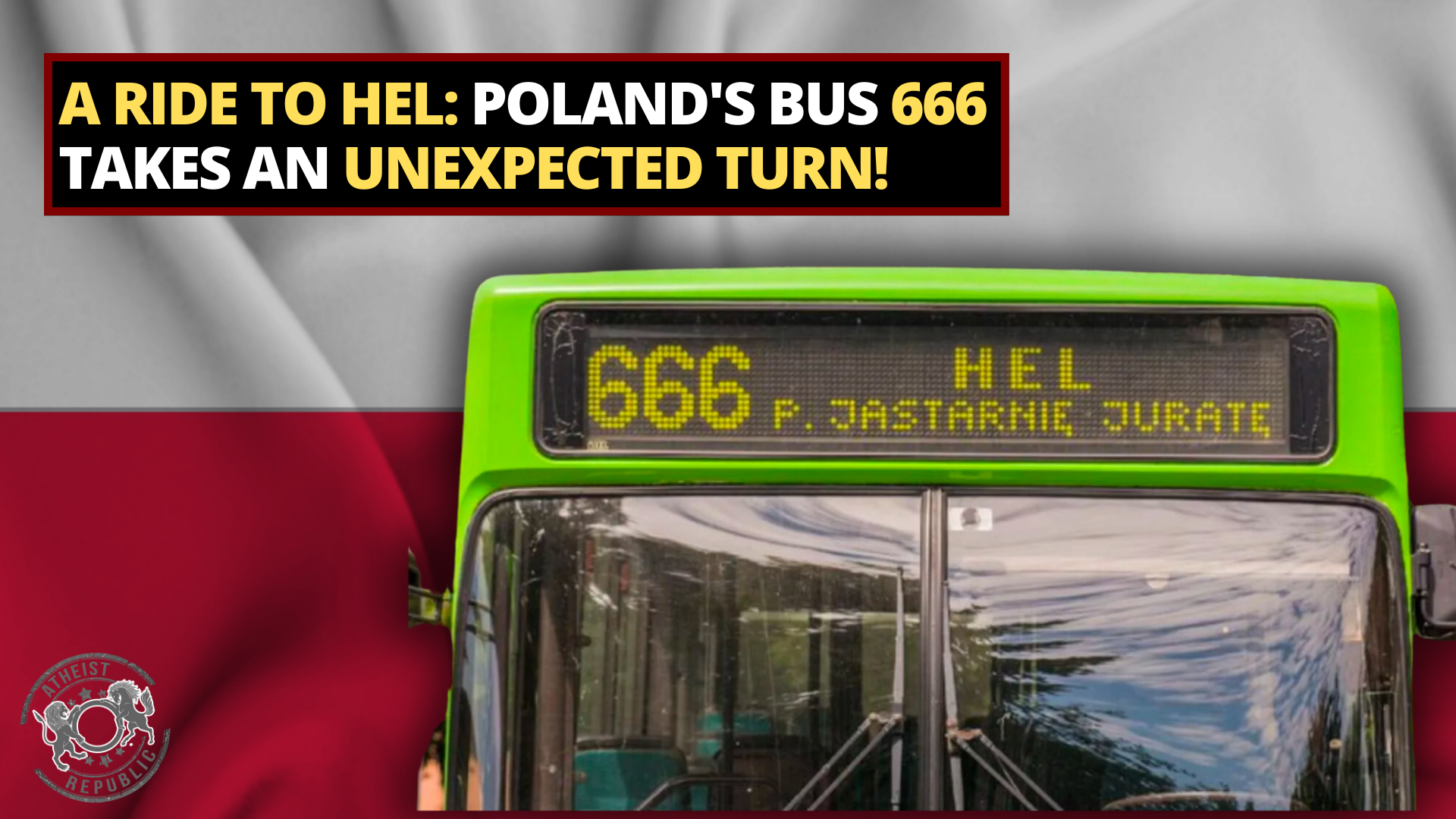
Poland’s Ministry of Infrastructure on June 1, 2026, announced the revival of the “Highway to Hell” (Droga do Pieku) bus route, a 666-kilometer pilgrimage tour linking Warsaw to the Holy Cross Mountains, after a 2024 court ruling blocked its operation. The route, originally launched in 2022 as a tourist attraction, faces renewed legal challenges from regional authorities over environmental permits and safety concerns.
Legal Reversal and Neutral Branding Adjustments
Poland’s Ministry of Infrastructure confirmed on Monday that the “Highway to Hell” (Droga do Pieku) bus route—officially designated as Route 666—will resume operations this summer, despite ongoing disputes over its name and symbolism. The decision follows a May 2026 administrative court ruling in Kraków that overturned a 2024 ban by the Holy Cross Voivodeship (Malopolskie) on grounds that the route’s branding violated local religious sensitivities. The ministry stated that the route’s operational license had been renewed under a neutral designation, “Scenic Route 666”, while acknowledging that the original name would remain a marketing draw.
The route, which winds through Warsaw, Radom, and the Holy Cross Mountains, was first introduced in 2022 by Polish Bus Lines (PBL), a subsidiary of PKP Intercity, as a themed tour combining tourism with references to Satanic and occult imagery. The bus itself was painted with 666 in bold red lettering, and stops included visits to alleged “Satanic sites” such as the Zawiercie Devil’s Bridge and the Olkusz Witches’ Forest. Critics, including the Polish Episcopal Conference, argued that the route exploited religious symbolism for commercial gain, while supporters framed it as a satirical travel experience akin to Poland’s “Highway to Heaven” (Droga do Nieba), a Christian-themed route.
In 2024, the Holy Cross Voivodeship issued a temporary operating ban after local clergy and environmental groups petitioned the Regional Administrative Court (WSA) in Kraków, citing concerns over road safety, environmental impact, and blasphemy. The court’s May 2026 reversal cited procedural errors in the original ban and ruled that the route’s operation did not constitute a public nuisance under Polish law. However, the decision did not address the symbolic controversy, leaving open the possibility of further legal challenges.
Church Opposition and Corporate Defense of the Route’s Commercial Intent
The revival of the route has reignited debates over free speech, commercialization of religion, and regional autonomy in Poland. The Holy Cross Voivodeship has signaled it will appeal the court’s decision, arguing that the route’s name and branding trivialize religious symbolism and could incite offense. A spokesperson for the Polish Episcopal Conference stated that the church remained “deeply concerned” about the route’s implications, particularly in conservative Catholic regions.
The use of the number 666 in public transportation is not a matter of tourism but of disrespect for religious beliefs. We will continue to monitor this case closely and explore all legal avenues to protect the dignity of faith.
Bishop Andrzej Jeż, Secretary of the Polish Episcopal Conference
In contrast, PKP Intercity defended the route as a legitimate business venture with no intent to offend. A company spokesperson emphasized that the route had never received complaints from passengers and that its operations complied with all safety and environmental regulations. “This is a themed tour, not a religious statement,” the spokesperson said. “We respect all beliefs but also the right of travelers to choose their own experiences.”
Legal experts note that the case tests the boundaries of Poland’s freedom of expression laws, particularly under the Constitution of the Republic of Poland (Article 54), which guarantees the right to conduct business without undue interference. However, local government powers under the Act on Regional Self-Government allow voivodeships to restrict activities deemed harmful to public order or moral standards. The outcome of any appeal could set a precedent for similar disputes in Poland, where religious and secular tensions have flared in recent years over issues such as LGBTQ+ rights, abortion laws, and historical memory.
Economic Divide Between Occult-Themed and Christian Tourism Routes
The “Highway to Hell” route has generated mixed economic impacts since its 2022 launch. Official data from the Polish Tourist Organization (PTO) shows that the route attracted approximately 12,000 passengers in its first year, though ridership dropped to around 5,000 in 2024 following the operating ban. PKP Intercity has not disclosed updated financial figures, but industry analysts suggest the route’s revival could boost tourism in the Holy Cross Mountains, a region that has struggled with declining visitor numbers in recent years.

Competing routes, such as the “Highway to Heaven” (a Christian-themed bus tour operated by Polish Catholic Pilgrimage Services), have thrived, carrying over 30,000 passengers annually. The contrast has fueled accusations that the “Highway to Hell” is being targeted for political or ideological reasons. A report by the Institute of Public Affairs (IPA), a conservative think tank, argued that the ban reflected “cultural censorship” rather than genuine safety concerns.
Environmental groups, however, have raised separate objections to the route’s carbon footprint. The Holy Cross Mountains are a protected biosphere reserve, and activists argue that increased bus traffic could damage fragile ecosystems. The Green Network of Poland (Zielona Sieć) has called for stricter environmental impact assessments on all themed tourism projects, including the “Highway to Hell” revival.
Expansion Plans and the Route’s Long-Term Viability
The immediate future of the “Highway to Hell” route hinges on the outcome of the Holy Cross Voivodeship’s appeal, which could take six to twelve months to resolve. In the meantime, PKP Intercity has indicated it will proceed with operations under the neutral “Scenic Route 666” branding, though marketing materials will likely continue to reference the original name. The company has also signaled plans to expand the route’s offerings, including guided tours to occult-themed sites and partnerships with local breweries (some of which use Satanic imagery in their branding).
Beyond the legal battle, the route’s revival raises broader questions about Poland’s evolving relationship with secularism and tourism. While the country remains overwhelmingly Catholic, rising secularization among younger generations and international tourism trends have created space for provocative or niche travel experiences. Whether the “Highway to Hell” becomes a permanent fixture or a short-lived novelty will depend not only on court rulings but also on public perception and economic viability.
One certainty is that the debate will continue—both in the courts and in the Polish media, where the route has become a symbol of cultural clashes in a nation grappling with modernization and tradition. For now, the buses are back on the road, and the number 666 remains a lightning rod for Poland’s religious, legal, and touristic landscapes.